A Glimpse of Tanvi's Vision: Fintech in 2024
- Peter Johnson

- Jan 3, 2024
- 5 min read
I still remember when I wrote my predictions about fintech in 2023 last year. I was very anxious about what I wrote and worried that none of it was comprehensible. Looking back on their accuracy, I'm pleasantly surprised that I do have a knack for it. It supports the idea that reading fintech newsletters and being engaged with conversations on Twitter are profitable activities. It also reinforces the idea that anyone can be a thought leader, whether they are an investor in a well-known VC, the creator of a remarkable fintech startup, or a fintech executive. Even someone with humble aspirations, like me, can be one.
In 2023, I achieved a major personal milestone, obtaining a fantastic job at Intuit Ventures, and relocating to San Francisco. Simultaneously, I was instrumental in the growth of VC Unleashed, the non-profit I co-founded that promotes racial equity amongst VCs. Additionally, I lent a helping hand to four separate fintech-based start-ups as an angel investor. An icing on the cake was being named as one of NYC Fintech Women’s Inspiring Fintech Females. I can honestly say that it's a pleasure to be here, and am humbled by my successes this year.
However, the focus of this writing is on fintech. Therefore, let's move on to the related topic!
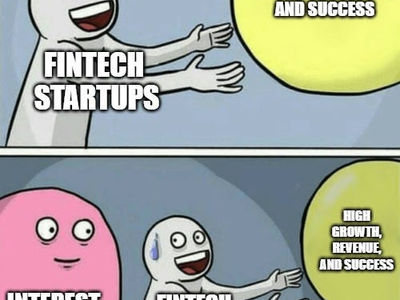
Despite the regional banking crisis, criminal charges against Sam Bankman-Fried and Changpeng Zhao, and the fall of BaaS, 2023 has been a year of waiting. Consumer fintech stocks have seen some improvement, but remain inconsistent. The “hot” fintechs still attracted oversubscribed rounds of funding, whereas many others closed down, raised capital at reduced valuations, or clung to their reserve budgets. Although there have been acquisitions such as Visa's takeover of Pismo and Robinhood's purchase of X1, consolidation has not occurred at the rate or for the sale prices that had been anticipated. Everyone is waiting to see whether the IPO market will open, valuations will rise, and venture capitalists will become increasingly generous.
2023 was surely in a stagnant state, as everyone adapted to the new interest rate situation and anxiously waited to discover the potential repercussions. No one can accurately predict when the proverbial shoe will fall and what damage it will cause. Personally, I believe the true test of fintech will become apparent when the greatly appraised B2B fintechs, such as Plaid, Stripe, Deel, etc., conduct their IPOs. Unfortunately, there is no indication that any of these corporations are planning on going public anytime soon; however, if Apex’s IPO is successful, it could set the precedent for the others.
The upcoming year of 2024 may well be a thrilling time, with speculations that interest rates could decline and IPOs may take place. What impact might this have for the financial technology sector? Here is my opinion…
I firmly believe that vertical SaaS will become a major focus this year. You may be wondering why this is relevant to fintech. The reason is that fintech is a major factor when it comes to generating revenue. Vertical SaaS companies create a SaaS product for a certain task and then add payments, loans, insurance and other services in order to increase their profits. The challenge is to figure out how to get customers to use their fintech products – this is the “take rate” - and if it is done right, it can lead to the success of vertical SaaS companies.
It's truly interesting to explore vertical Software as a Service. Besides attending to various sectors, I have noticed four different strategies during the past 12 months. In my opinion, all four of these versions have the capability to be successful, and the method which triumphs in a selected vertical relies on the particular details of that space.
The events of 2023, which saw a high interest rate climate and a regional banking crisis, made it clear how important fixed income and treasury management is. Understanding all the nuances of these instruments - such as different types of fixed income products, resale value, and coupon payments - requires specialized tech. Up until now, much of the fintech industry has focused on equities. However, this year likely saw an increased focus on fixed income from both consumers and businesses, and if the Fed cuts rates, we may witness a lag in customer demand for equities, despite any rate increases.
2023 was certainly the year in which AI became hugely significant. Already, anticipations are high for what 2021 will bring. Nevertheless, I still battle to see how generative AI could redefine fintech. There are certainly advantageous applications of AI and ML when it comes to fintech. But, the useful generative AI use cases I have observed are limited to generating emails, proposals, and reports. Although these necessitate specific data sets relevant to fintech, the current generative AI tools already manage to generate outputs of quality.
I anticipate that a shutdown of Mint will result in a rise in the number of new startups operating in the PFM arena. This could provide an opportunity to incorporate generative AI, thereby constructing and executing a tailored financial plan covering things such as retirement savings and equity investment. Moreover, there seem to be startups set on automating the process for customers as opposed to teaching them how to control it themselves.
This idea appears to be quite promising. Many consumers are ready to pay subscription fees for financial services, so capitalizing off of these apps is feasible. Nevertheless, PFM apps have had difficulty in entreating people who are not money-wise, and I doubt that generative AI will address this. I am interested to find out how the up and coming PFM apps are addressing this difficulty.
Generative Artificial Intelligence (AI) seems to be gaining momentum in the CFO's office. Several startups are endeavoring to use AI to automate fractions of the CFO role and generate intelligence that will help businesses make more informed decisions quickly. Each of these products has its own distinctive elements; connecting to dissimilar data sources, designating internal models, and subsequently including various product features to attract potential customers. Evidently, this issue seriously troubles customers and I anticipate more businesses to launch projects aimed at solving it. I'm simultaneously excited and dubious - Intuit Assist might offer a majority of these functions; but the customers' preference of obtaining these insights (e.g. accounting platform, bank or FP&A tool etc.) and the suitable blend of data are still uncertain.
As an individual who invests, I attempt to generate equilibrium between the discussion and areas of interest for me as well as a few different selections. Below are domains I am excited about and which I will be spending time on this year. If you are constructing in any of these spaces– feel free to contact me, I would be delighted to talk!
That's it! Thank you for reading. If you have any ideas or comments, I'm all ears. And if you enjoyed this post, make sure to follow me on LinkedIn & Twitter!


Comments